The Sleep Series, Part 3 of 5: how sleep and recovery talk to your genes.
Written by Annette Scott, Revivery co-founder and lead instructor.
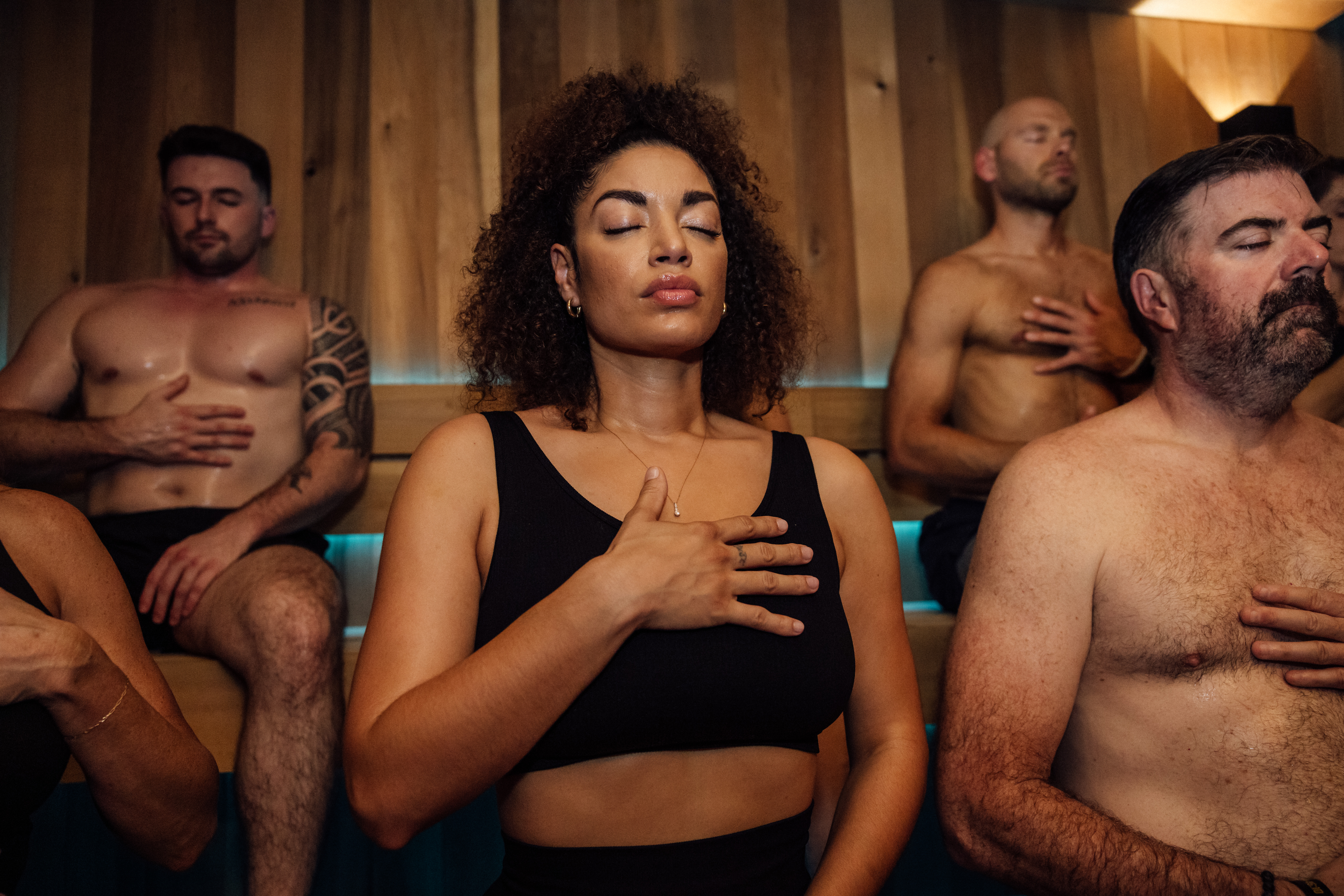
Once again, sauna offers a useful way into this conversation. When you deliberately step into the heat, you hand your body a manageable challenge.
Your heart rate climbs. Your blood vessels widen. You begin to sweat. Your body has to respond. Then comes the other half of the equation:
Recovery.
Challenge, then recovery
This is the heart of hormesis: a tolerable, intentional challenge that prompts the body to adapt.
But here’s the part our more-is-better culture tends to conveniently forget. The stressor isn’t the whole protocol. Recovery is part of the protocol, too.
Stress without enough recovery isn’t resilience. It’s simply more stress.
Sleep sits squarely on the recovery side of that equation, and this is where the conversation grows far bigger than whether you feel rested tomorrow morning.
The stresses we take on, and the recovery we allow afterward, can shape the body’s signaling all the way down to how our genes are expressed.
Your genes are not a sentence
Here is the belief this series exists to dismantle: that your biological path, how quickly you age and how your risk of disease stacks up, was sealed at conception and is now out of your hands.
It isn’t. Epigenetics is the study of changes in gene activity that happen without altering the DNA sequence itself. Sleep is one of many lifestyle and environmental factors linked to those changes.
Epigenetic clocks estimate your biological age by reading patterns such as DNA methylation: small chemical marks layered onto DNA that shift with age, behavior, illness, and environment.
And sleep shows up here. Research has linked insomnia and short sleep with faster aging on some of these epigenetic measures, and studies of deliberate sleep loss have tied it to changes in pathways involved in inflammation and cellular stress.
A conversation, not a verdict
That doesn’t mean we can sauna and sleep our way to immortality. Sadly, no loophole yet. But it does overturn a far more interesting assumption: your genes are not simply a sentence handed down at conception.
They’re part of an ongoing conversation between what you inherit and how you live.
And every night, sleep gets a seat at the table. Our biology is wildly responsive. It all comes back to ritual, rhythm, and repetition. Keep your practice.
Try this week
- Treat recovery as part of the session. After your sauna, give your body time to come down before you rush to the next thing. Book a session.
- On your hardest training days, protect that night’s sleep. That’s when the recovery happens.
- Keep your wake time steady, weekends included.
Next in The Sleep Series, Part 4: The Protocol Nobody’s Upselling You. Why the most powerful sleep habit is free.
Missed the earlier parts? Read Part 1: The Sleep Metric You’ve Been Ignoring and Part 2: Your Body Runs a Nightly Production Schedule.
Sources
- “Short sleep and insomnia are associated with accelerated epigenetic age,” PMC. Link
- “Sleep traits causally affect epigenetic age acceleration: a Mendelian randomization study,” Scientific Reports, 2024. Link
- “Insomnia accelerates the epigenetic clocks in older adults,” PMC. Link
- “Sleep disturbances, shift work, and epigenetic ageing in working-age adults,” Clinical Epigenetics (Young Finns Study). Link