The Sleep Series, Part 2 of 5: why warming up before bed helps your body cool down for sleep.
Written by Annette Scott, Revivery co-founder and lead instructor.
Here’s something deliciously counterintuitive about sitting in the heat before bed: your body warms parts of you up in order to cool you down for sleep.
Stay with me.
Warmer on the outside, cooler on the inside
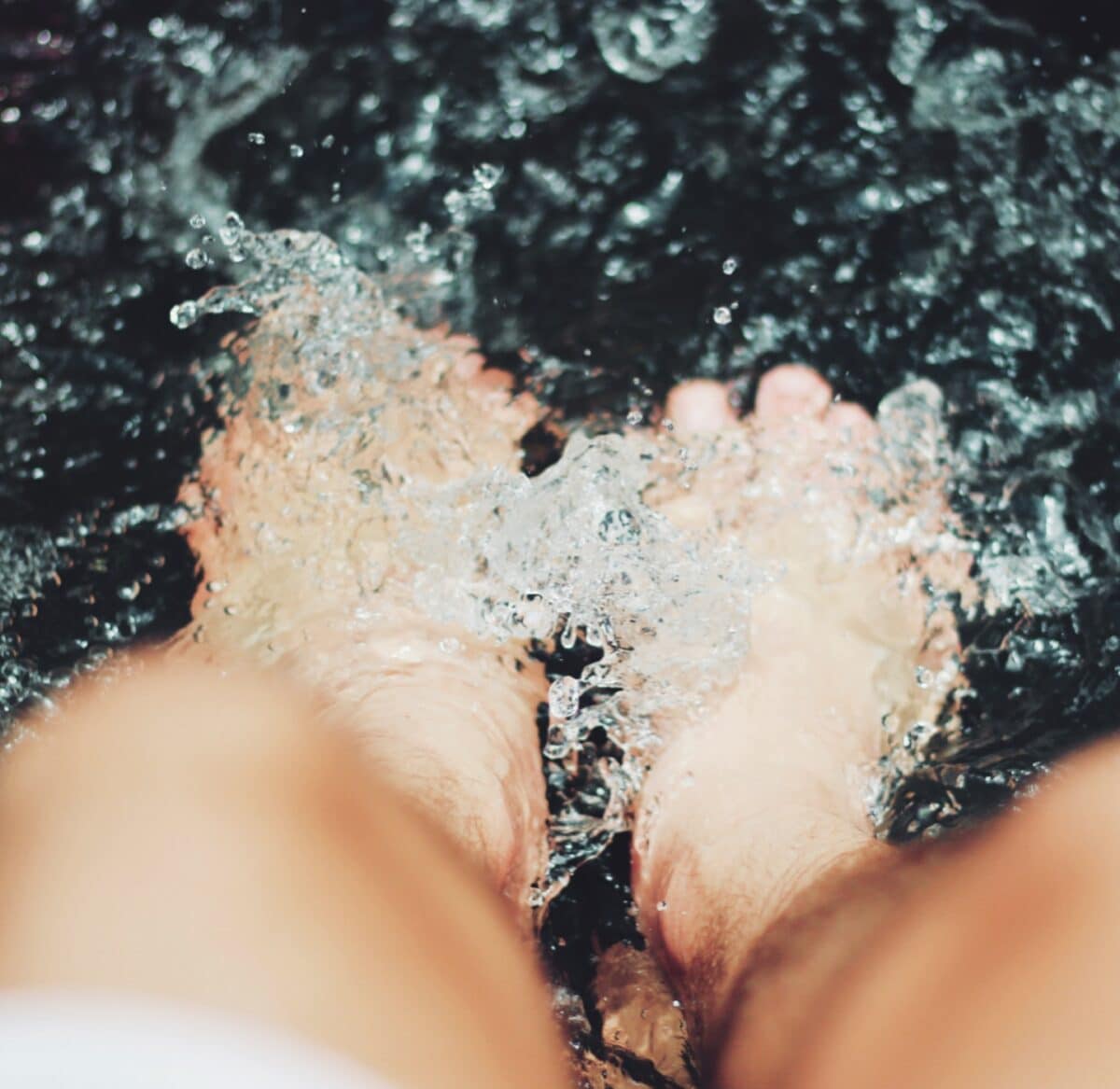
As bedtime approaches, your body begins moving heat from its core out toward the skin, especially the hands and feet. Blood vessels near the surface widen, warm blood flows outward, and skin temperature rises.
So, strangely enough, you grow warmer on the outside as you grow cooler on the inside.
That shift matters. Heat leaving the core is closely tied to how quickly sleep arrives. Researchers have found that this release of heat through the skin is one of the strongest physical predictors of how fast we fall asleep, and studies have even shown that gently warming the skin can help people drift off sooner.
Where sauna comes in
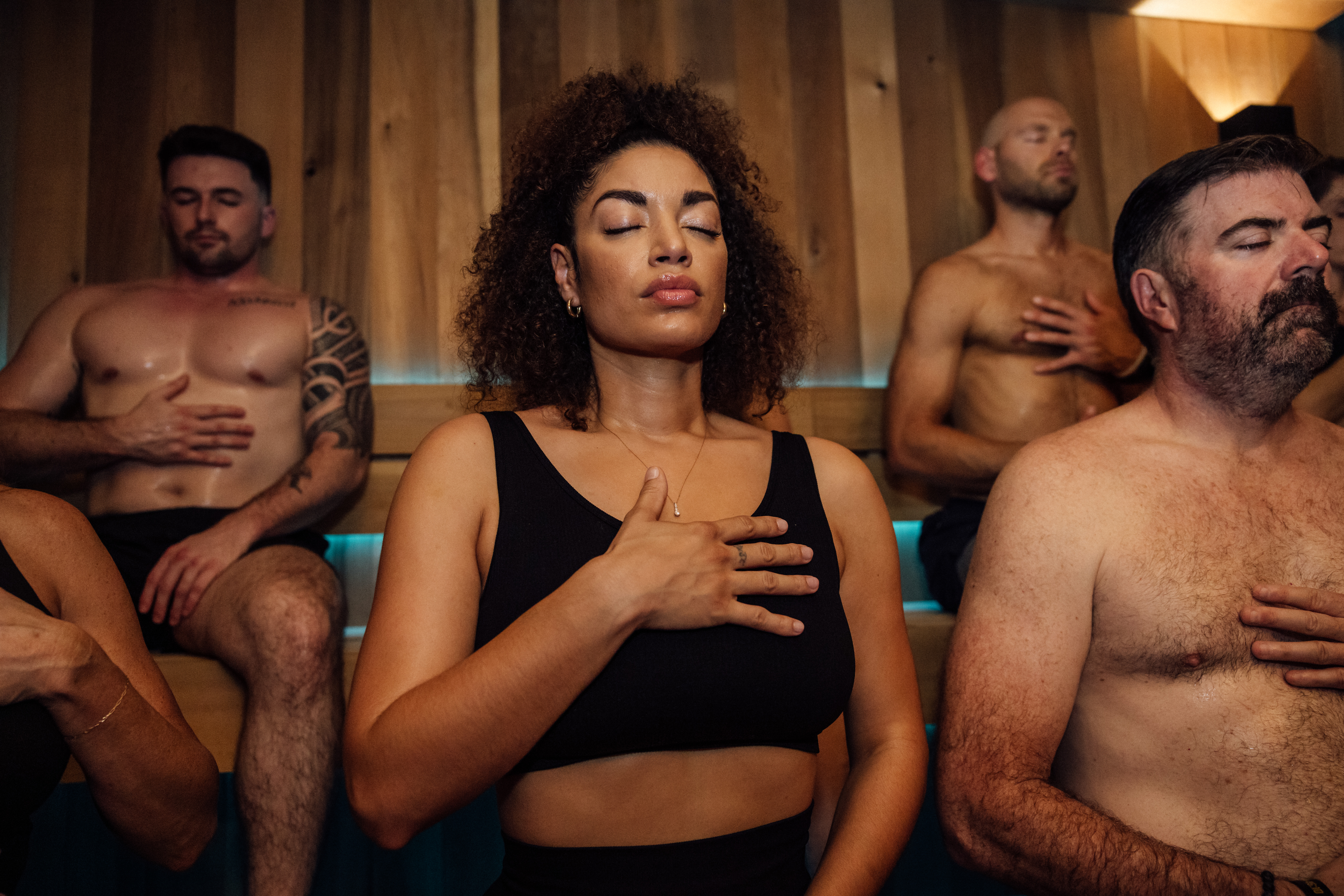
Which brings us back to sauna. In the heat, the vessels near your skin open wide and blood rushes to the surface. Step out, and that warm skin becomes a remarkably good radiator, releasing heat into the air and letting your core temperature fall.
It’s the same reason a warm bath or shower an hour or two before bed can feel oddly sleepy. You’re adding heat, yes, but you’re also setting up the very process your body uses to let heat go.
So the sequence isn’t really:
Get hot → get cold → sleep.
It’s closer to:
Warm the skin → move heat outward → release it → lower core temperature → prepare for sleep.
Warming and cooling aren’t working against each other. The warming is what makes the cooling possible.
How cool is that? Literally. And once you’re asleep, your core temperature generally stays lower, especially during deep, non-REM sleep. Temperature isn’t just background noise while you sleep. Temperature control and sleep are deeply intertwined.
A question for contrast lovers
This raises an interesting question for those of us who love contrast therapy. If the goal of your evening sauna is better sleep, do you need to go straight into very cold water afterward?
Maybe not.
Cold sets off a different response. It narrows the blood vessels near the skin, the exact opposite of the widening that carries heat outward, and a cold plunge can be stimulating, too.
That doesn’t make cold plunge “bad for sleep.” We don’t yet have enough research directly comparing an evening sauna on its own with sauna followed by a cold plunge to say so. It simply means the goal matters.
A morning contrast session meant to wake you up and an evening sauna meant to wind you down don’t need to follow the same protocol.
The night shift clocks in
And this is where the bigger sleep conversation begins, because temperature isn’t the only thing running on a schedule. Beneath it all sits an extraordinary biological clock, coordinating processes throughout your body. Every night, whether you’re paying attention or not, the night shift clocks in.
While you sleep, your body runs a quiet but essential maintenance shift. It makes hormones, clears cellular waste, consolidates memory, repairs tissue, and regulates metabolism, all on a timetable shaped by your circadian clock.
At the genetic level, that clock runs on a feedback loop of genes with wonderfully sci-fi names like CLOCK, BMAL1, and PER1. They rise and fall on a roughly 24-hour cycle, helping cells throughout your body know what time it is. When sleep is chronically short or irregular, that coordination can slip.
Then there’s the cleanup that comes with deep sleep. Research into the glymphatic system has revealed a brain-wide clearance pathway that becomes especially active during sleep, helping carry metabolic byproducts out of brain tissue.
Hormones keep time, too. Growth hormone release is closely tied to deep, slow-wave sleep. Testosterone production is influenced by sleep. Cortisol follows its own daily rhythm.
This isn’t “sleep hygiene theater.” It’s biochemistry with a shift schedule. And the better your body knows when the shift begins, the better those systems can do what they evolved to do.
Try this week
- If tonight’s goal is sleep, try an evening sauna and skip the cold plunge. Let your body cool on its own. Book an evening session.
- On non-sauna nights, take a warm bath or shower an hour or two before bed.
- Keep your wake time steady, weekends included.
Next in The Sleep Series, Part 3: The Fate You Thought Was Fixed. How sleep and recovery talk to your genes.
Missed Part 1? Read The Sleep Metric You’ve Been Ignoring.
Sources
- “Circadian Rhythm Genes and Their Association with Sleep and Sleep Restriction,” PMC. Link
- “Growth hormone and cortisol secretion in relation to sleep and wakefulness,” PMC. Link
- “Impact of Five Nights of Sleep Restriction on Glucose Metabolism, Leptin and Testosterone in Young Adult Men,” PMC. Link
- “Sleep, testosterone and cortisol balance, and ageing men,” PMC. Link
- “Targeting Sleep Physiology to Modulate Glymphatic Brain Clearance,” American Physiological Society. Link
- “Norepinephrine-mediated slow vasomotion drives glymphatic clearance during sleep,” Cell. Link