What the research says about sequencing sauna and cold plunge — and why the right order depends on what you are chasing.
Scroll any cold plunge thread on Reddit for more than a minute and you’ll run into the same question. It’s asked in r/coldplunge and r/Sauna a few times a month. It’s asked at Revivery several times a week, usually by someone walking in for an intro session for the first time. Sauna first, or cold plunge first?
The replies are predictable. Half the comment section says “always end on cold.” The other half says “always end on hot.” A handful invoke Wim Hof. A handful invoke their grandfather in Finland. Nobody quite agrees, nobody quite explains why, and the person who asked usually leaves the thread more confused than they started.
The honest answer turns out to be more interesting than either camp suggests. There isn’t one right order. There’s one right order for your goal — and once you know which goal you’re after, the answer is straightforward.
What ending on cold actually does to your body
Cold immersion at the end of a contrast session does a few specific things, and they’re easier to understand if you separate the moment-of-plunge effects from the lingering ones.
In the moment, the cold triggers an enormous vasoconstriction — your skin and peripheral blood vessels clamp down to keep heat near your core. The body releases a flood of norepinephrine, the same neurotransmitter that sharpens focus under stress. Heart rate variability spikes, breathing becomes deliberate, and the parasympathetic and sympathetic systems both engage in a way that very few daily activities replicate.
The interesting part is what happens after you step out. Because your blood is still pulled toward your core, you stay metabolically activated for an hour or longer. This is what researchers call cold-induced thermogenesis, and it’s where the longevity case for ending on cold comes from. Dr. Susanna Søberg, a Danish researcher who studies cold and heat exposure, published a study in Cell Reports Medicine in 2021 that compared regular winter swimmers — people who alternated cold dips with sauna sessions every week for at least two years — to a control group that did neither. The swimmers were burning roughly 500 to 1,000 extra calories per day in their cold-induced thermogenic response. The controls were burning about 20.
That metabolic activation isn’t just about calorie burn. It’s evidence that your mitochondria — the energy factories inside your cells — are being trained to handle stress more efficiently. The Søberg group also found that the winter swimmers had better thermoregulation overall: lower spikes in pulse and blood pressure when exposed to cold, and a better ability to maintain core temperature without shivering.
All of which is the case for ending on cold. Closing the session in the plunge keeps the metabolic machinery running for the hour or two after you walk out — the same machinery that drives the cardiovascular adaptations that make this practice a longevity tool, not just a wellness habit.
What ending on heat actually does to your body
The case for ending warm is quieter, but it’s not weaker. It’s just a different goal.
When you end on heat, the vasodilation that the sauna induces stays with you for a while. Your peripheral blood vessels remain open. Your core temperature is slightly elevated, and then — over the next ninety minutes or so — it drifts back down. That gentle drop in core body temperature happens to be one of the most reliable signals your circadian system uses to initiate sleep.
A 2019 meta-analysis in Sleep Medicine Reviews looked at seventeen studies on passive body heating before bed. The conclusion: a warm bath or shower at 104 to 108.5 degrees Fahrenheit, taken one to two hours before sleep, shortens sleep onset by an average of ten minutes and improves sleep efficiency and self-rated sleep quality. The mechanism isn’t the warmth itself — it’s the post-warmth temperature decline that mimics what your body naturally does as it transitions into sleep.
There’s a similar argument from the autonomic nervous system side. Heat exposure shifts you parasympathetic — the “rest and digest” branch — over the time you spend in the sauna. Cold pulls you sharply back toward sympathetic activation. If your session is at 7 a.m. and your goal is mental energy for the day, ending sympathetic is exactly right. If your session is at 7 p.m. and your goal is melting into a deep night of sleep, ending sympathetic might mean you’re staring at the ceiling at 11.
This is the part Reddit usually leaves out. Cold isn’t inherently more useful than heat. They do different things, on different timescales, and the question of which to end on is really a question of what you want to feel in the next hour, and what you want to feel for the rest of the day.
So which order is right for you?
“The real benefit comes from contrast of hot to cold, hot to cold, hot to cold,” says Annette Scott, one of Revivery’s co-founders and lead instructors. She has run this protocol with thousands of members, and her view is that the order question matters less than people think — but it still matters, once the cycling itself is in place.
Three lenses make the decision simple.
Time of day matters. Morning sessions and evening sessions both end on cold — but the final cold round looks different. “Their final cold exposure will be based on preference and proximity to going to sleep,” Annette says. “The closer you are to going to sleep, the less time you want to spend in your last cold exposure round.” A 6 a.m. session might close with two minutes in the plunge. A 9 p.m. session might close with thirty seconds. The cold is still the closer; the dose adjusts.
Your goal matters more. If you’re optimizing for the metabolic and longevity adaptations Søberg studies, end cold. If you’re optimizing for sleep quality, keep that final cold round very brief — thirty seconds rather than two minutes. If you’re optimizing for athletic recovery, the answer is more nuanced — cold blunts hypertrophy adaptations if you take it within an hour of resistance training, but it accelerates recovery from endurance and central-nervous-system fatigue. If you’re optimizing for anxiety reduction or nervous system regulation, the protocol gets interesting, and we’ll come back to that in a minute.
Your starting state matters most. If you arrived at the studio already wired, already running on cortisol from a hard day, ending cold can be too much — keep it short. If you arrived sluggish, foggy, under-slept, ending cold longer is exactly what you need. The protocol that’s “correct” is the one that delivers you to a different state than the one you walked in with.
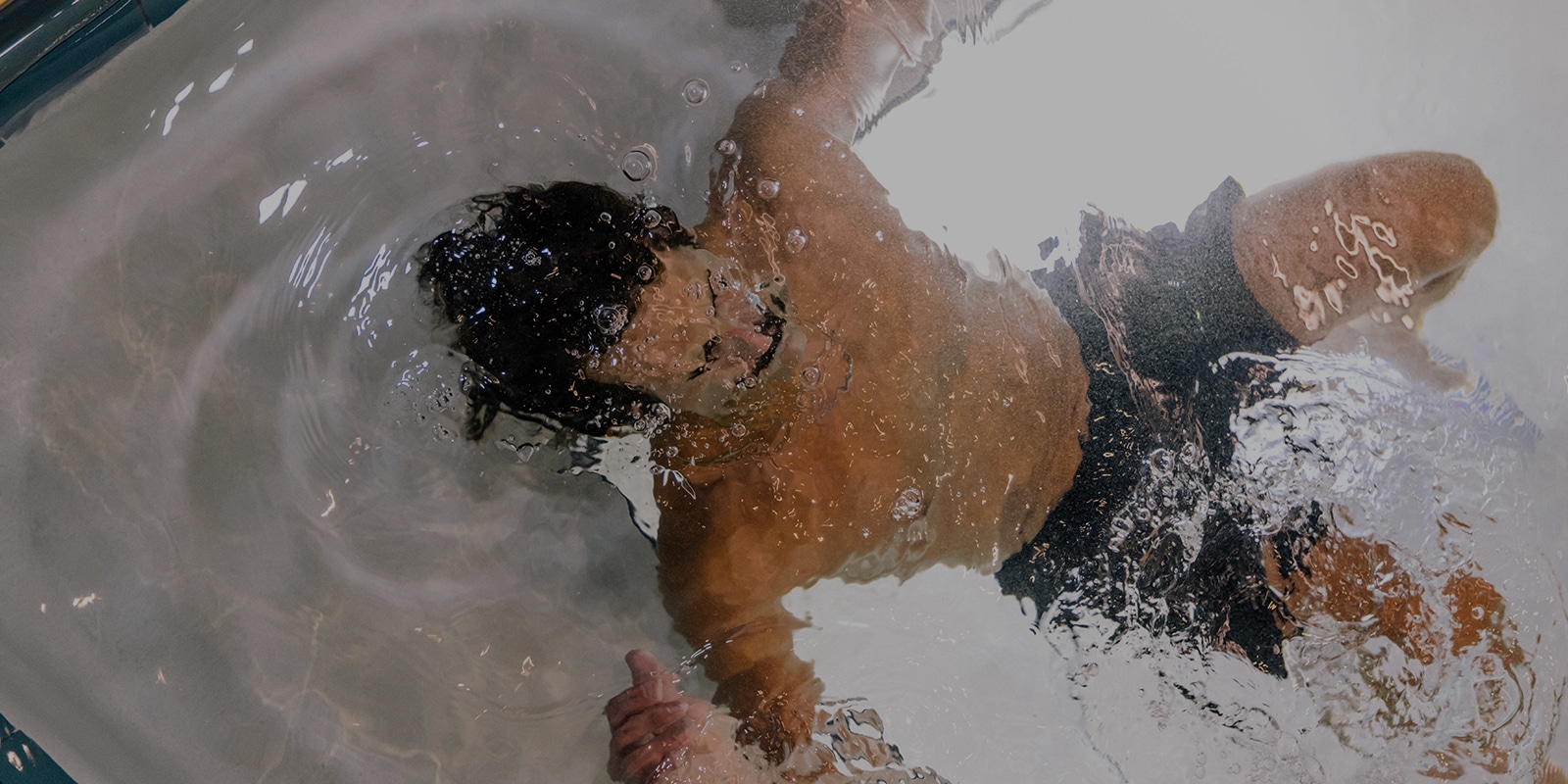
What we do at Revivery
The Revivery session starts before the first full sauna round even begins.
“Most people will appreciate having had the chance to get a little cool and wet before they head into the sauna for the first time,” Annette says. “The vast majority of people will spend a short amount of time — super short — in the cold before going into a full sauna session. And then as a part of their first full round of sauna, they’ll do a full round in the cold, which would be somewhere between two and five minutes at the max.”
From there, the structure is three full hot-to-cold cycles. The cold rounds run two to five minutes; the sauna rounds run longer, with breathwork and conversation woven into both. The only place the protocol bends, as Annette described earlier, is at the very end — where the length of the final cold round adjusts based on how close you are to bed.
In other words, Revivery’s house answer to the Reddit question is closer to always end on cold — just shorter if you’re heading to bed. A 6 a.m. session and a 9 p.m. session both finish in the same place, but the final cold round in the evening might be thirty seconds where the morning one is two minutes. That single adjustment quietly resolves most of the Reddit debate: the metabolic and resilience case for cold doesn’t disappear at night, but the sympathetic load needs to.
The thing nobody on Reddit mentions
The order of sauna and cold plunge is one of the easiest questions to settle. The data is reasonably clear, the trade-offs are knowable, and once you’ve picked the goal you’re chasing, the protocol writes itself.
But the truth is that order is roughly the third-most-important variable in a contrast practice. The first is consistency — three sessions a week for a year will beat the perfect protocol done irregularly. The second is breath — the difference between gasping through a cold round and breathing through it is the difference between a body that’s bracing and a body that’s actually adapting. The third is order. Maybe.
The most effective contrast therapy practice is the one you can sustain — and the practice you sustain is usually the one where the people around you are sustaining theirs too. The right order to put your sauna and cold plunge in is the one that lets you show up next Tuesday.
That’s the real answer Reddit is asking for. The order is just the beginning.